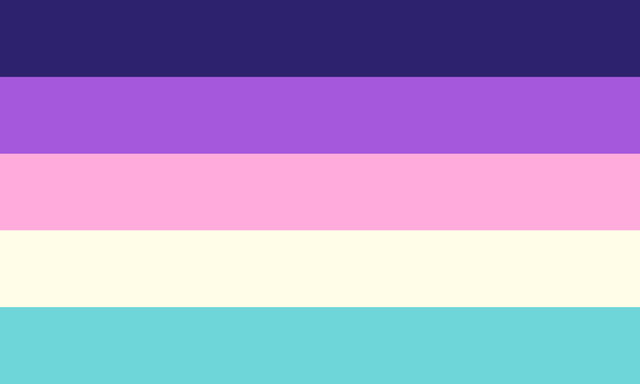
i think i want to do a poll / survey type thing for my system where whenever they’re available, they can fill it out. i want it to be about their gender identity, because some alters within my system have experiences i have a hard time conceptualizing, and since i’m a DID system with pretty heavy amnesia i don’t have any “bleed-over” or innate understanding of how it is for them
A Collection of Kenous Referential Language (That I’ve Personally Stumbled Upon)
[Plain text: a collection of kenous referential language (that I’ve personally stumbled upon). End of plain text.]
Please let me know if I’ve missed any, and if the post isn’t accessible enough. Some of these are more.. adjacent, rather than properly referential language, I think? But I felt the need to include them. Also I tried my best to link sources!
omen (link) - a kenochoric person, typically older, equivalent to terms like man/woman/enban. plural form omens or omeim (formal)
hex (link) / vex (link) - a kenochoric person, typically younger, equivalent to terms like girl/boy/enby. plural form hexes or vexes
kenore & chori (link) - a kenochoric person, generally. uncommon usage but an alternative to omen & hex/vex. *personally interpret it in similar vein to terms like guy and gal/girl in casual use. plural form kenores, choris or chories
kenochorim (link) - the formal word for a group of kenochoric people. typically used to describe kenochoric people in a more formal way, compared to more casual terms like omens or kenores. In similar vein to “ladies” instead of “girls” or “boys”.
kenic (link) - a kenochoric alignment, equivalent to terms like xenic or masc/fem aligned.
kenous/kenoine (link) - a kenochoric quality, equivalent to terms like feminine or masculine. short form is keno (like fem/masc) and kenosity is the equivalent to masculinity and femininity.
KEIN (Kenochoric-In-Nature/Kenous-In-Nature/Kenoine-In-Nature) (link) - an in-nature term for kenochoric, equivalent to terms like FIN (Feminine-In-Nature) and MIN (Masculine-In-Nature). Can be called keingender too.
kiaspec/keiaspec (link) - an umbrella term for anyone on the kenochoric spectrum, equivalent to terms like miaspec and fiaspec. *the post linked goes in further detail for anyone who’s curious!
links above go to creation posts or the absolute closest approximation i could access / find. symbol-specific links, if it was just a proposal or was made by a separate person from the original coiner, are linked on the plus-signs :)
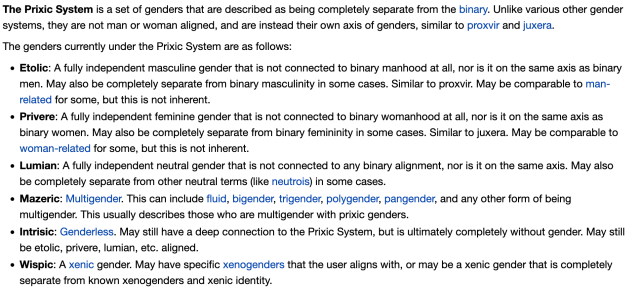
got that screenshot of the prixic stuff from a wiki and saw that one of the notes included an archive of my old carrd on it with a bunch of personal shit and aughhhhhh 😬 😬 😬 😬
it is now time for me to randomly admit that the “prixic system” [something i made years ago] was originally meant for my OCs, and had i made it today they’d be ecters, not genders
basically, i was trying to capture how these characters who are Nonhumans fundamentally do not experience “gender,” but their society still had something closely resembling the binary genders and the roles / stereotypes we put onto them. they were being imitated by people observing humanity, but still fundamentally outside of it. they didn’t fully understand what the words “man” “woman” “masculine” “feminine” etc. meant to humans, but an approximation was still enforced as closely as possible among a very different society / culture (because the powerful members of said society is Fucked Up And Hierarchical and Loves To Create Division)
so it’s really really funny looking back at these and realizing “oh yeah, i was totally trying to conceive of the idea of an ecter before i ever coined the concept”
i’m in the stage of knowing html/css known as “i can edit the base tumblr theme in the advanced options to look pretty different, but i wouldn’t be able to actually make a tumblr theme”
i wonder if a subsect of music genders exist where its a specific instrument parts in songs. like a gender that’s specifically basslines or percussion in songs (or a specific song(s))
i was thinking about this yesterday!! i totally wanna make these..
go for it! i was thinking about making them maybe, but honestly i’d have no idea where to even start lol. i just love basslines a Normal amount :3
was thinking about how often neogender-centric spaces [like mogai] are specifically focused on coining, to the point where finding actual talk about personal experiences and other things is kinda hard to find, and also how it could make someone feel disconnected from themselves because there’s so many cool things to look at and enjoy, but it’s hard to find people sharing personal experiences or having long talks about it that are easily accessible. so i think maybe there should be a tag that’s for things like mogai and whatnot, but that shouldn’t be tagged on coining or flag posts, so that there’s a dedicated tag to find things other than that, like discussion, personal experiences, and similar, not things related to coining or making flags
stuff to consider:
shouldn’t be based on any one specific term ie xenogender or outherine so that it’s inclusive of everyone
maybe? shouldn’t use a term like mogai/liom/etc. necessarily? because not everyone who uses these terms is in those communities. but idk
idk
cuz like, coining is great! it’s how we get new terms. but also like… not only does it feel isolating to not see many people sharing your experience outside of coining posts, but it also kinda just adds to the shitty stereotype some queer people have that things like xenogenders, neogenders in general but especially xenos, are just these ~aesthetic~ things and not something to take seriously. like no. they’re real identities just as much as any other. but because of how expansive neogenders can be, and the huge amount of variation people can have, mixed with just a general culture of coining and flag making (which, to be clear, is really cool) means that it can leave a bit to be desired when it comes to other aspects of being neogender or xenogender or outherine or kenochoric or Whatever. there should be more to it that’s front-and-center i think. instead of being something that’s kinda hard to really find or even begin to search for
i also thought of qlog—queer + blog, but i like qdialog too
i wonder if a subsect of music genders exist where its a specific instrument parts in songs. like a gender that’s specifically basslines or percussion in songs (or a specific song(s))
Kenochoric is a term I created back in 2020. It’s gone through numerous edits, additions, and different sites to talk about what it can mean, subterms for it, and new terminology. With this version of the post, I hope to put in everything relevant up to this point, and have a live post available on Tumblr since my old blogs are gone.
Kenochoric’s official “homepage” is now on my Neocities. The old Carrd is still up, but it has a disclaimer that will redirect you to the right place. I only keep it up for archiving’s sake. The new page is still technically a WIP, and will contain more and more over time, but it’s fully functional and has the definition below.
[1] The Definition of Kenochoric:
Kenochoric is a gender identity centered around concepts like the unknown, darkness / obscurity, liminal spaces, emptiness, the uncanny valley, nostalgia, and anything else that can be considered similar, or evokes similar “vibes.” It’s also an umbrella term for identities that can fall under this definition. There isn’t any one specific “thing” that makes something kenochoric or not, because gender identity and what it means to you is personal.
While kenochoric was created to be a gender umbrella, it is also sometimes used to describe other kinds of identities.
The term kenochoric stems from two things; keno was taken from kenopsia, and the prefix, kenós, is a Greek root meaning “empty.” Choric was taken from another Greek root, khôros, meaning “room,” and was also partly chosen because it somewhat resembles words like choir and chorus.
Kenochoric isn’t a part of other umbrella terms, such as xenogender. It is a stand-alone identity. That being said, you can of course be kenochoric as well as other genders, such as a kenochoric man / woman, kenochoric and xenogender (xenochoric), or anything along those lines. Hell, even people without gender identity (namely gendervoid and similar terms) could consider themselves kenochoric.
Someone who is kenochoric can be called an omen, or alternatively a hex. Omen is meant to be more in-line with words like man / woman, while hex is a little closer to boy / girl, but you don’t need to be any certain age to use either, similar to how some adults still refer to themselves as girls / boys simply because they prefer it. An alternative to hex, vex, was also created by Tumblr user @sangrenfreude!
Kenous refers to kenochoric “qualities,” equivalent to masculine and feminine. Kenosity is the equivalent to masculinity and femininity. Kenous is also sometimes referred to as kenoine.
[2] The Flags and Symbols
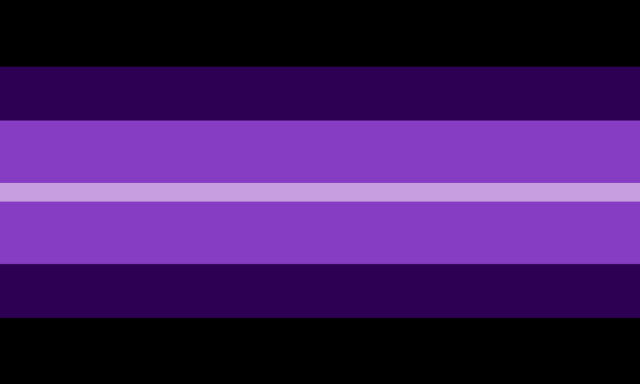
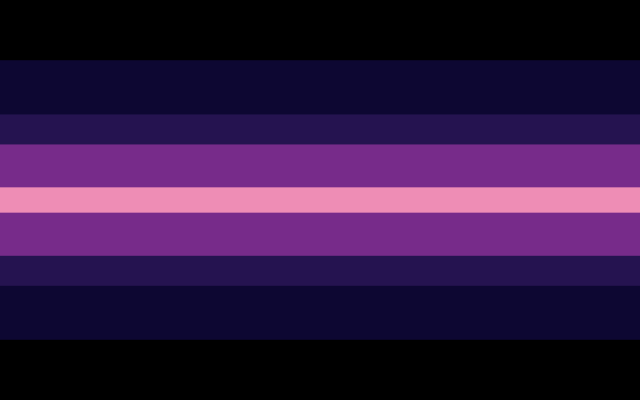
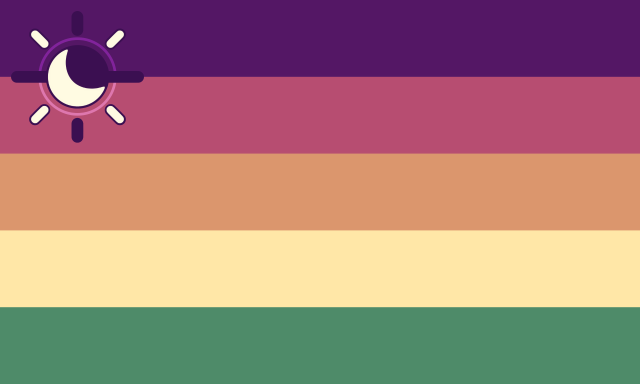
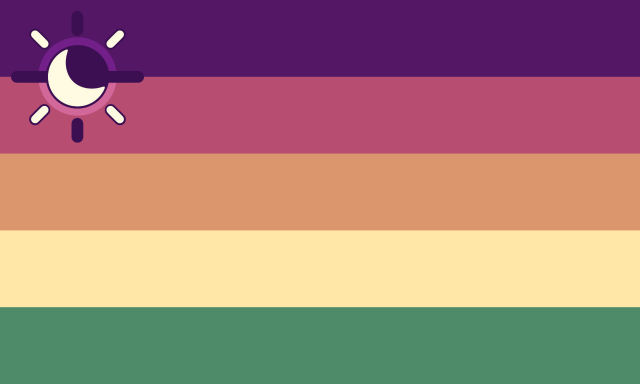
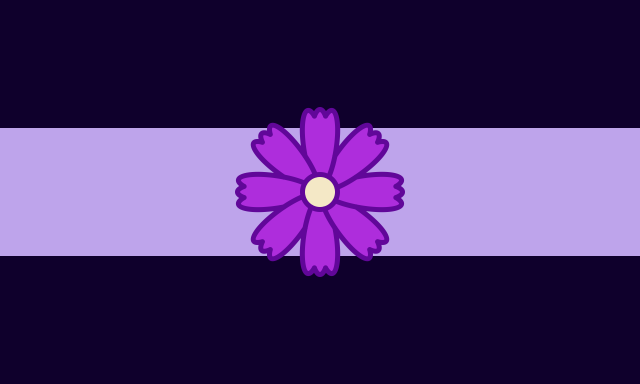
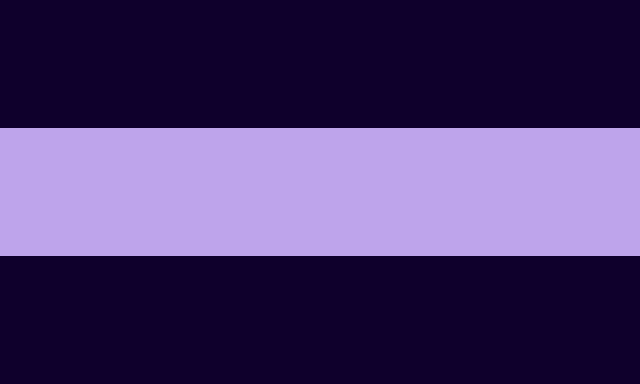
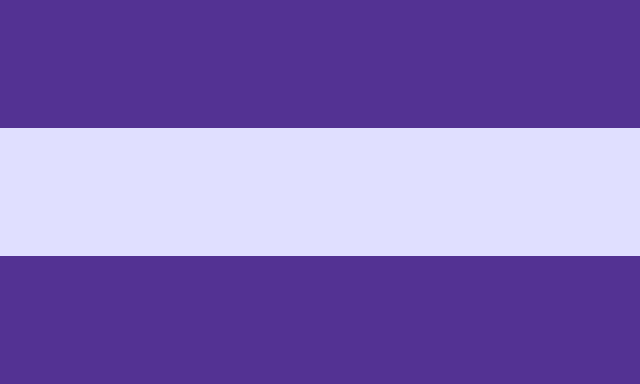
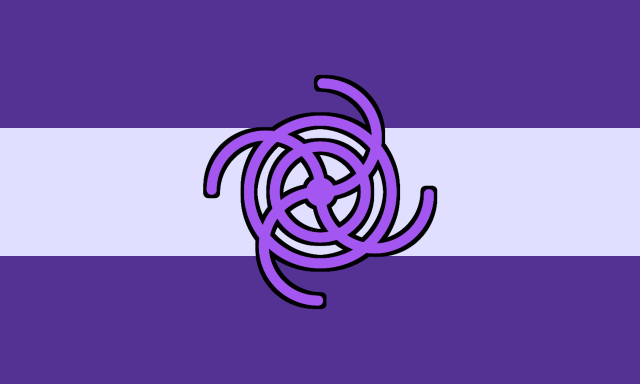
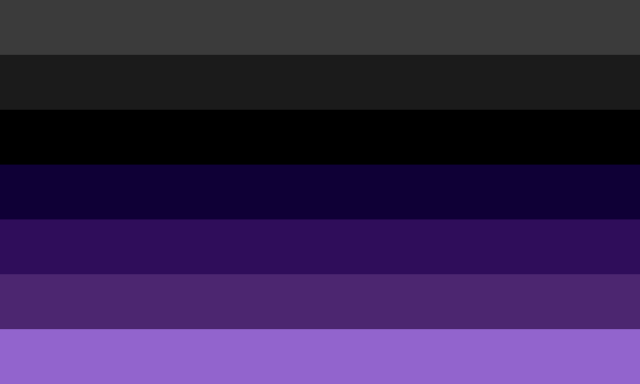
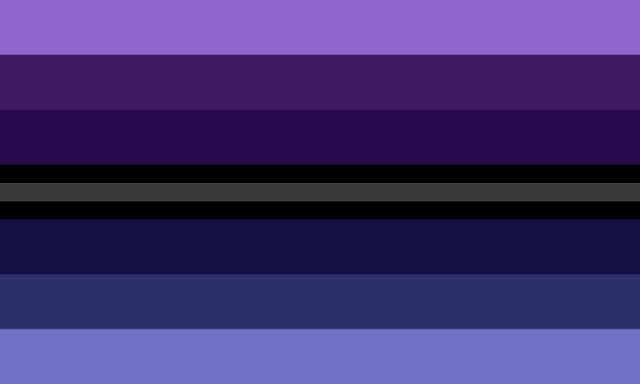
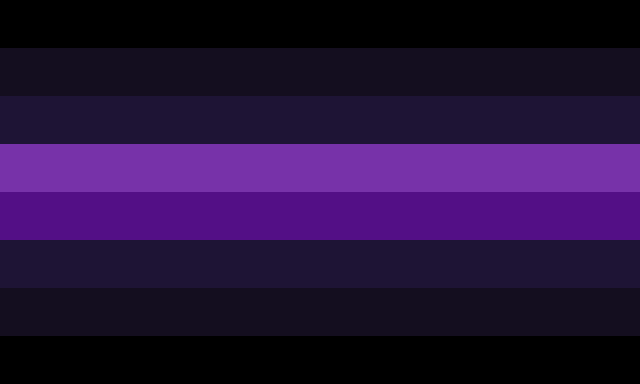
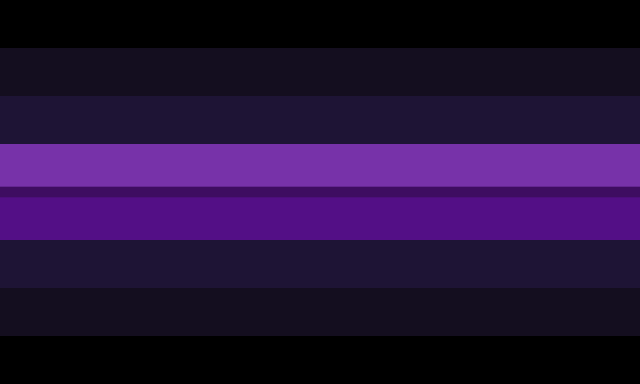
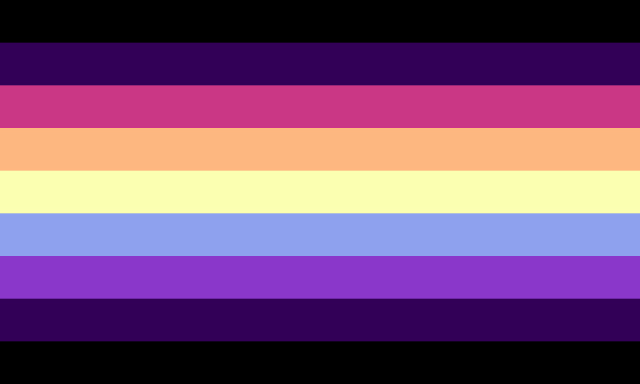
The flag on the top is the official, original kenochoric flag. Below are two alternatives I made a couple years ago.
ALTALT
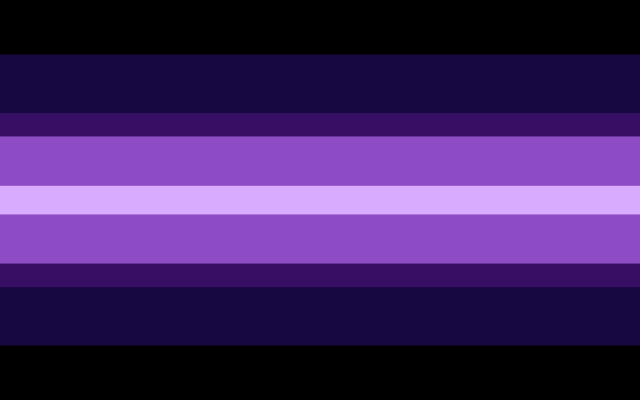
These aren’t “new” or “preferred” flags or anything, I just wanted to toy around with the flag a bit and really enjoyed these. So, they can be used as much as the original flag is.
ALTALT
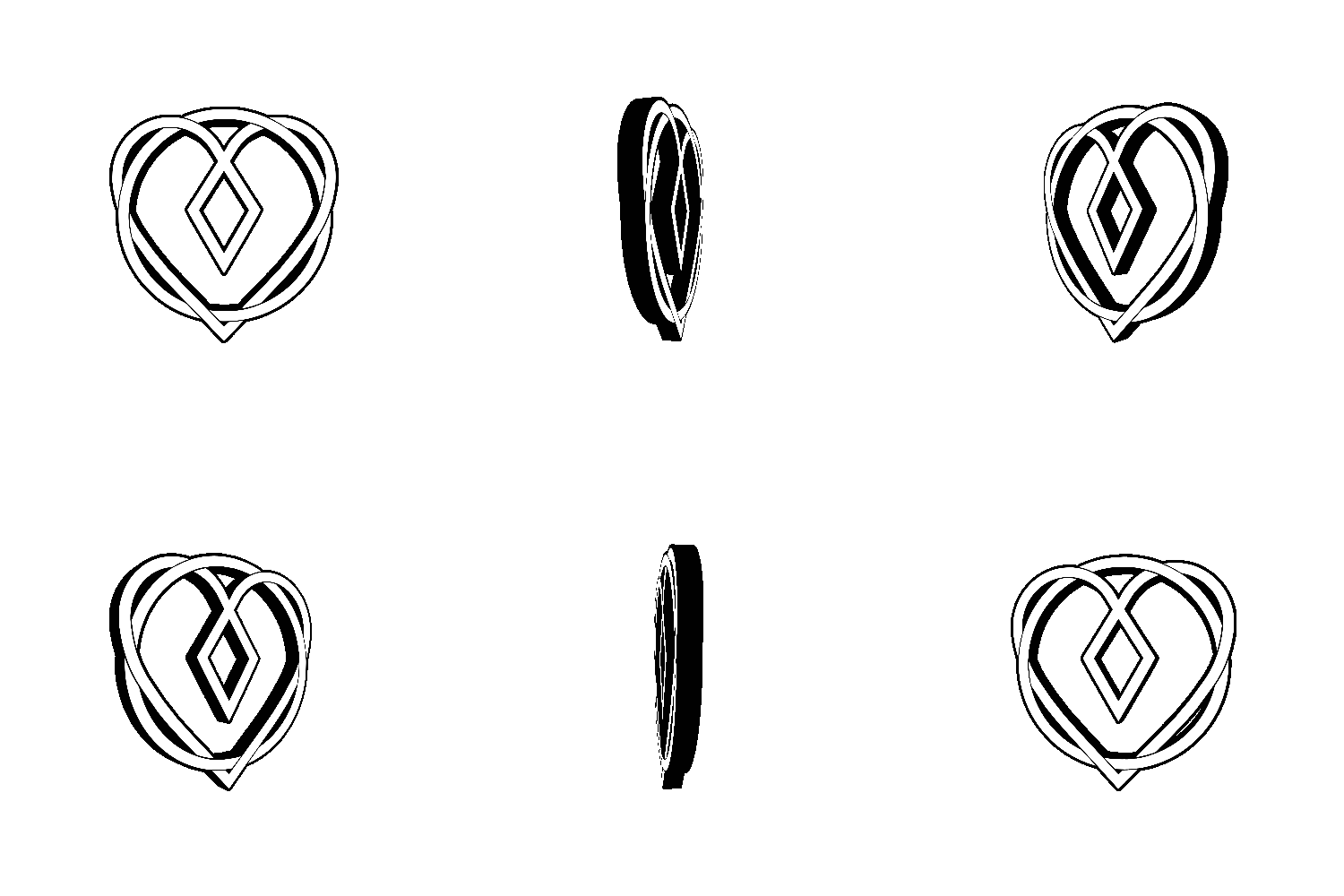
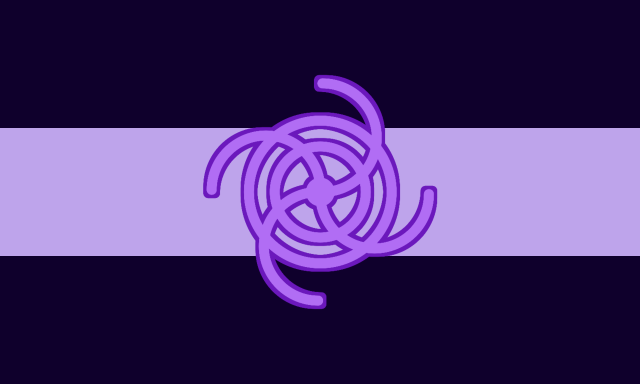
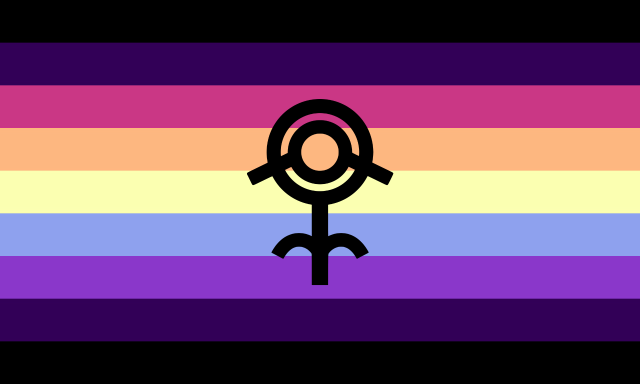
This is the kenochoric symbol, which was originally made by @mourningmogaicrew. There is a white and black variant here, so you might only see one of them on screen.
[3] Some Extra Terminology
Kenochord is often used to describe a kenochoric gender.
Achamoric, or kenomoric, is a term kenochoric people may use for their orientation, not fitting into other categories of attraction or labels due to their kenosity. It can be an orientation on its own, or it can be used as an umbrella term to describe a variety of kenous attraction (such as the terms below.)
Haunian or Salvaenis a term for being attracted to kenochoric people in a “gay” way. Comparable to lesbian and veldian.
Kenochoric-loving-kenochoric (klk), also called sablic or caligic, is for kenochoric people attracted to other kenochoric people, exclusively or not. Comparable to sapphic (wlw) and vincian (mlm).
Amatopunk is a term I coined in 2021, and has gone through a few different editorial additions since then, mostly to accommodate for more diverse groups of people, and discuss more facets of amatonormativity. There’s a lot more to add onto since then, so I’m creating a new post to refer to in 2025.
Amatopunk is a subculture and movement dedicated to rejecting amatonormativity in all forms. It disputes the notion that someone has be in, or actively seeking, a relationship in order to be “normal,” that the way someone engages in relationships has to fit the amatonormative standard, and that any specific type of love or connection is what inherently makes us whole or fulfilled. It tells you to take a closer look at the way we define love, relationships, and other societal standards, and ask: “why? is this necessary?”
While the movement was first made in mind for those who are a-spec (asexual, aromantic, and other similar spectrums), it is not exclusive to them. In fact, it is not exclusive to any one type of person, community, or experience. It is centered around what you believe and how you view things, not any one specific label or experience. It is closely-tied to the queer community, but you do not need to be queer or lgbtq+ to be amatopunk.
Issues such as marriage rights for polyamorous and disabled people, destigmatizing a-spec identity and experiences, rights for those fighting to get a divorce or contraception, and rejecting notions, stereotypes, and pressure from those trying to force people to fit into amatonormative structures, are some of the different key priorities of amatopunk, though the discussion goes much deeper than these things alone. Amatopunk combines all factors of amatonormativity, and may touch upon other forms of oppression that can often intersect, such as ableism, misogyny, and racism.
Amatopunk is not, and never has been, a movement dedicated to normalize any kind of dangerous relationships, such as predatory, abusive, or incestuous ones. This is non-negotiable.
[2] The Flag & Symbols
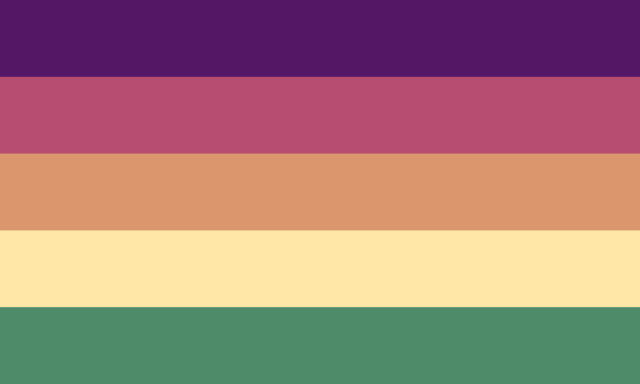
The amatopunk flag, posted at the top, was made with inspiration from a variety of different pride flags, but the individual stripes do not represent any one specific community. This is so that it can stay intentionally broad and inclusive as a political and subculture-based label.
As far as symbols go, when the term was created there wasn’t one considered specific to it. A variety of symbols have been used, such as the anarchist “A” with a circle around it, and icons of hands clasped together, but none are official, and none have been widely adopted.
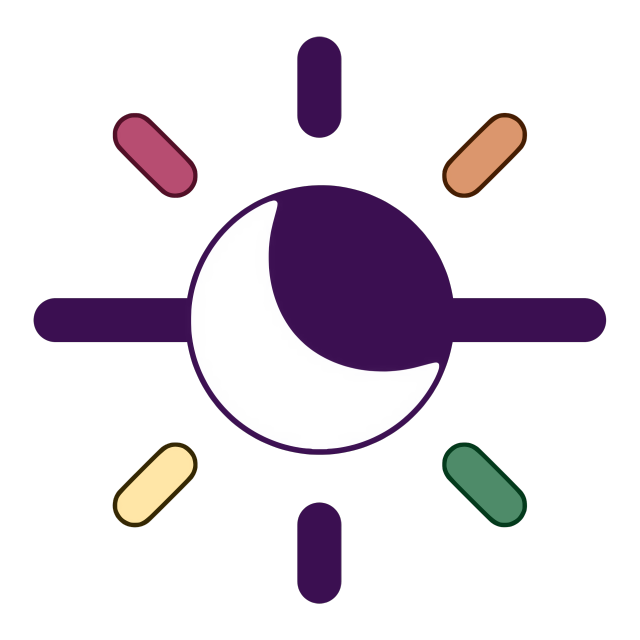
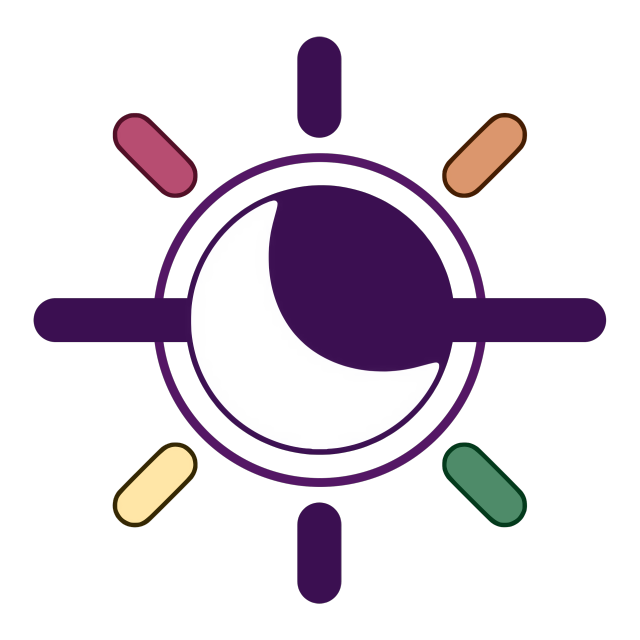
More recently, I decided to take a crack at what I thought could be a decent amatopunk symbol. I do not consider it “the” symbol, you can always make or use your own, but I thought it would be nice to contribute one.
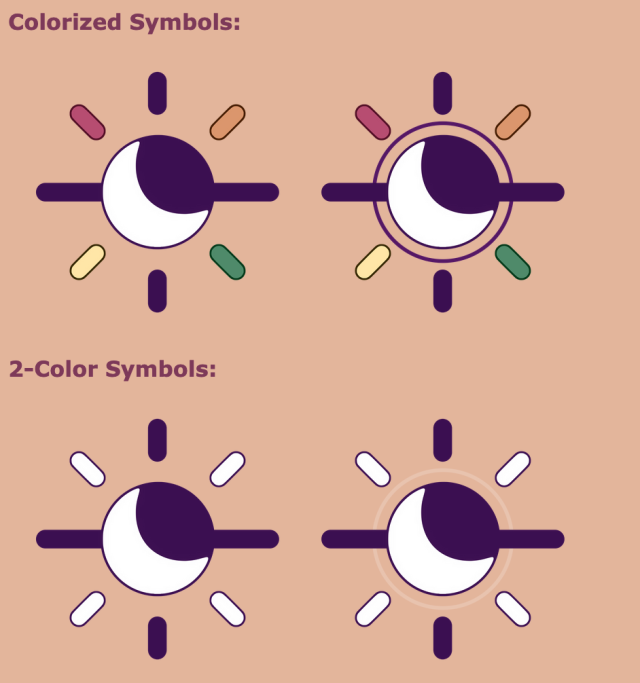
These are the full-color versions, taken from the flag itself. There are a variety of alternative versions of these symbols, including a blank one and 2-color one, on the Neocities page.
The symbol was made in mind of many different groups of people. The eclipse represents a general “bond” between things, and how it is not innately romantic or otherwise. This can represent amatopunk and its focus on relationship structures, and could also represent those who are in or desire relationships while still ideologically aligning with amatopunk. The ring around the second image may represent people who orbit “around” this, such as those who participate in different, less socially accepted relationships, either due to discrimination, a different structure such as QPRs and waverships, or anything else. The beams in different colors represent the groups who may be entirely disconnected from this framework, either politically, simply by choice, or due to their identity. It may also represent those in a relationship with more than two people, hence why there is a plurality of them. The two connected lines in the horizontal center can vaguely resemble the “A” symbol mentioned before, with it going across the moon, representing the term’s political and ideological nature.
I don’t think any symbol can perfectly include every single group that can fit under a term this all-encompassing, but I did my best to include as much variety as possible. As stated before, you do not have to use it, and you can always make your own.
Here is the amatopunk flag with these symbols added onto it:
[3] Further terminology
Amari, or Amarity, refers to an unspecified or “generalized” form of attraction. This can refer to someone who chooses not to distinguish different types of attraction, does not prioritize any one kind of it, or it may refer to those who simply feel a sense of unspecified attraction in some kind of way.
Relationship Anarchy is core component of amatopunk for many; it refers to the belief that relationships should not be bound by set rules, aside from the rules the individuals involved mutually agree upon. It is based on the rejection of the traditional power structure that is the norm in our society.
Affinity is a term that has been used in place of attraction or love among some individuals, as a way to describe having an… affinity for other people, but in a less conventional way.
Amatosonas were created with direct inspiration from voidsonas, which relates to voidpunk. It refers to a depiction of yourself in “an amatopunk way,” or as an amatopunk-based persona. This has often been done with plant, floral, or fungal themes, due to how their relationships and general structures work in a unique way, and just because it’s cool. But, your amatosona does not need to fit any rules; it can be whatever you want. You also, of course, don’t need to have one of these
it’s really funny having such distinct and funky gender and alterhuman experiences while having a very just. normal. orientation. without anything complicated.
gender: weird incomprehensible concept
alterhumanity: weird incomprehensible concept
sexuality: women
yeah i’m a uhhhh. multigender individual who is a woman and also a man and also a [DATA EXPUNGED] and [STATIC NOISES] and i’m intertwined with things that both terrify and fascinate me and i get the most gender euphoria from being a mysterious unknowable entity with the most obscured physical traits possible and being generally ominous, and my alterhuman identity is some kind of incomprehensible concept that even i can’t explain because i’m not sure if brains can entirely conceptualize it including mine but i think it’s got some type of tie to outer space or black holes or something. and i’m not into guys
it’s really funny having such distinct and funky gender and alterhuman experiences while having a very just. normal. orientation. without anything complicated.
yeah i’m probably going to make a half-decent amount of masterposts and general posts for some of the bigger terms i’ve made in the past, just as a way to have a new source outside of just neocities. i doubt i’ll make THAT many of them though, mostly just stuff for the broader labels
Amatopunk is a term I coined in 2021, and has gone through a few different editorial additions since then, mostly to accommodate for more diverse groups of people, and discuss more facets of amatonormativity. There’s a lot more to add onto since then, so I’m creating a new post to refer to in 2025.
Amatopunk is a subculture and movement dedicated to rejecting amatonormativity in all forms. It disputes the notion that someone has to be in, or actively seeking, a relationship in order to be “normal,” that the way someone engages in relationships has to fit the amatonormative standard, and that any specific type of love or connection is what inherently makes us whole or fulfilled. It tells you to take a closer look at the way we define love, relationships, and other societal standards, and ask: “why? is this necessary?”
While the movement was first made in mind for those who are a-spec (asexual, aromantic, and other similar spectrums), it is not exclusive to them. In fact, it is not exclusive to any one type of person, community, or experience. It is centered around what you believe and how you view things, not any one specific label or experience. It is closely-tied to the queer community, but you do not need to be queer or lgbtq+ to be amatopunk.
Issues such as marriage rights for polyamorous and disabled people, destigmatizing a-spec identity and experiences, rights for those fighting to get a divorce or contraception, and rejecting notions, stereotypes, and pressure from those trying to force people to fit into amatonormative structures, are some of the different key priorities of amatopunk, though the discussion goes much deeper than these things alone. Amatopunk combines all factors of amatonormativity, and may touch upon other forms of oppression that can often intersect, such as ableism, misogyny, and racism.
Amatopunk is not, and never has been, a movement dedicated to normalize any kind of dangerous relationships, such as predatory, abusive, or incestuous ones. This is non-negotiable.
[2] The Flag & Symbols
The amatopunk flag, posted at the top, was made with inspiration from a variety of different pride flags, but the individual stripes do not represent any one specific community. This is so that it can stay intentionally broad and inclusive as a political and subculture-based label.
As far as symbols go, when the term was created there wasn’t one considered specific to it. A variety of symbols have been used, such as the anarchist “A” with a circle around it, and icons of hands clasped together, but none are official, and none have been widely adopted.
More recently, I decided to take a crack at what I thought could be a decent amatopunk symbol. I do not consider it “the” symbol, you can always make or use your own, but I thought it would be nice to contribute one.
These are the full-color versions, taken from the flag itself. There are a variety of alternative versions of these symbols, including a blank one and 2-color one, on the Neocities page.
The symbol was made in mind of many different groups of people. The eclipse represents a general “bond” between things, and how it is not innately romantic or otherwise. This can represent amatopunk and its focus on relationship structures, and could also represent those who are in or desire relationships while still ideologically aligning with amatopunk. The ring around the second image may represent people who orbit “around” this, such as those who participate in different, less socially accepted relationships, either due to discrimination, a different structure such as QPRs and waverships, or anything else. The beams in different colors represent the groups who may be entirely disconnected from this framework, either politically, simply by choice, or due to their identity. It may also represent those in a relationship with more than two people, hence why there is a plurality of them. The two connected lines in the horizontal center can vaguely resemble the “A” symbol mentioned before, with it going across the moon, representing the term’s political and ideological nature.
I don’t think any symbol can perfectly include every single group that can fit under a term this all-encompassing, but I did my best to include as much variety as possible. As stated before, you do not have to use it, and you can always make your own.
Here is the amatopunk flag with these symbols added onto it:
[3] Further terminology
Amari, or Amarity, refers to an unspecified or “generalized” form of attraction. This can refer to someone who chooses not to distinguish different types of attraction, does not prioritize any one kind of it, or it may refer to those who simply feel a sense of unspecified attraction in some kind of way.
Relationship Anarchy is core component of amatopunk for many; it refers to the belief that relationships should not be bound by set rules, aside from the rules the individuals involved mutually agree upon. It is based on the rejection of the traditional power structure that is the norm in our society.
Affinity is a term that has been used in place of attraction or love among some individuals, as a way to describe having an… affinity for other people, but in a less conventional way.
Amatosonas were created with direct inspiration from voidsonas, which relates to voidpunk. It refers to a depiction of yourself in “an amatopunk way,” or as an amatopunk-based persona. This has often been done with plant, floral, or fungal themes, due to how their relationships and general structures work in a unique way, and just because it’s cool. But, your amatosona does not need to fit any rules; it can be whatever you want. You also, of course, don’t need to have one of these
it’s kinda funny after moving and being in a bit of a rough situation for a while i lost a very significant amount of weight, and while everyone else in my family was happy about it, i wasn’t, and i’m still not… i don’t look or feel quite right, i feel less “healthy,” more weak and prone to getting sick more often, and i just miss how i used to look and feel quite a bit. i remember family members would call me fat and i’d look in a mirror after, feeling awful at first because i was clearly being shamed about it, as if i was gross… but over time, i grew to actually like my weight and was pretty vocal about it, much to the dismay and confusion of said family. it felt like a part of me and it’s just. how i looked! it was normal and good. it doesn’t feel like getting better to lose it, it feels like getting worse
fatphobia is fucking awful like it makes people so cruel to their own family and friends. i have a section of my family that’s predominantly fat people, and with one exception they’re all very nice and literally just. you know. people. but everyone else in my family hates them for a reason they refuse to get into unless you prod them. when you do, it just boils down to “they’re gross and embarrassing” and you know exactly what they mean by that. it’s so fucked up that me saying “yeah actually i like my cousin, i consider her my friend” is seen as heresy just because she’s fat. how could you pick people who will shit-talk their family members bc of their appearance over people who literally helped us move and escape a fucking hurricane when nobody else would. purely based on their weight. absolutely miserable existence
it’s kinda funny after moving and being in a bit of a rough situation for a while i lost a very significant amount of weight, and while everyone else in my family was happy about it, i wasn’t, and i’m still not… i don’t look or feel quite right, i feel less “healthy,” more weak and prone to getting sick more often, and i just miss how i used to look and feel quite a bit. i remember family members would call me fat and i’d look in a mirror after, feeling awful at first because i was clearly being shamed about it, as if i was gross… but over time, i grew to actually like my weight and was pretty vocal about it, much to the dismay and confusion of said family. it felt like a part of me and it’s just. how i looked! it was normal and good. it doesn’t feel like getting better to lose it, it feels like getting worse
was thinking about how often neogender-centric spaces [like mogai] are specifically focused on coining, to the point where finding actual talk about personal experiences and other things is kinda hard to find, and also how it could make someone feel disconnected from themselves because there’s so many cool things to look at and enjoy, but it’s hard to find people sharing personal experiences or having long talks about it that are easily accessible. so i think maybe there should be a tag that’s for things like mogai and whatnot, but that shouldn’t be tagged on coining or flag posts, so that there’s a dedicated tag to find things other than that, like discussion, personal experiences, and similar, not things related to coining or making flags
stuff to consider:
shouldn’t be based on any one specific term ie xenogender or outherine so that it’s inclusive of everyone
maybe? shouldn’t use a term like mogai/liom/etc. necessarily? because not everyone who uses these terms is in those communities. but idk
idk
cuz like, coining is great! it’s how we get new terms. but also like… not only does it feel isolating to not see many people sharing your experience outside of coining posts, but it also kinda just adds to the shitty stereotype some queer people have that things like xenogenders, neogenders in general but especially xenos, are just these ~aesthetic~ things and not something to take seriously. like no. they’re real identities just as much as any other. but because of how expansive neogenders can be, and the huge amount of variation people can have, mixed with just a general culture of coining and flag making (which, to be clear, is really cool) means that it can leave a bit to be desired when it comes to other aspects of being neogender or xenogender or outherine or kenochoric or Whatever. there should be more to it that’s front-and-center i think. instead of being something that’s kinda hard to really find or even begin to search for
was thinking about how often neogender-centric spaces [like mogai] are specifically focused on coining, to the point where finding actual talk about personal experiences and other things is kinda hard to find, and also how it could make someone feel disconnected from themselves because there’s so many cool things to look at and enjoy, but it’s hard to find people sharing personal experiences or having long talks about it that are easily accessible. so i think maybe there should be a tag that’s for things like mogai and whatnot, but that shouldn’t be tagged on coining or flag posts, so that there’s a dedicated tag to find things other than that, like discussion, personal experiences, and similar, not things related to coining or making flags
stuff to consider:
shouldn’t be based on any one specific term ie xenogender or outherine so that it’s inclusive of everyone
maybe? shouldn’t use a term like mogai/liom/etc. necessarily? because not everyone who uses these terms is in those communities. but idk
Kenochoric is a term I created back in 2020. It’s gone through numerous edits, additions, and different sites to talk about what it can mean, subterms for it, and new terminology. With this version of the post, I hope to put in everything relevant up to this point, and have a live post available on Tumblr since my old blogs are gone.
Kenochoric’s official “homepage” is now on my Neocities. The old Carrd is still up, but it has a disclaimer that will redirect you to the right place. I only keep it up for archiving’s sake. The new page is still technically a WIP, and will contain more and more over time, but it’s fully functional and has the definition below.
[1] The Definition of Kenochoric:
Kenochoric is a gender identity centered around concepts like the unknown, darkness / obscurity, liminal spaces, emptiness, the uncanny valley, nostalgia, and anything else that can be considered similar, or evokes similar “vibes.” It’s also an umbrella term for identities that can fall under this definition. There isn’t any one specific “thing” that makes something kenochoric or not, because gender identity and what it means to you is personal.
While kenochoric was created to be a gender umbrella, it is also sometimes used to describe other kinds of identities.
The term kenochoric stems from two things; keno was taken from kenopsia, and the prefix, kenós, is a Greek root meaning “empty.” Choric was taken from another Greek root, khôros, meaning “room,” and was also partly chosen because it somewhat resembles words like choir and chorus.
Kenochoric isn’t a part of other umbrella terms, such as xenogender. It is a stand-alone identity. That being said, you can of course be kenochoric as well as other genders, such as a kenochoric man / woman, kenochoric and xenogender (xenochoric), or anything along those lines. Hell, even people without gender identity (namely gendervoid and similar terms) could consider themselves kenochoric.
Someone who is kenochoric can be called an omen, or alternatively a hex. Omen is meant to be more in-line with words like man / woman, while hex is a little closer to boy / girl, but you don’t need to be any certain age to use either, similar to how some adults still refer to themselves as girls / boys simply because they prefer it. An alternative to hex, vex, was also created by Tumblr user @sangrenfreude!
Kenous refers to kenochoric “qualities,” equivalent to masculine and feminine. Kenosity is the equivalent to masculinity and femininity. Kenous is also sometimes referred to as kenoine.
[2] The Flags and Symbols
The flag on the top is the official, original kenochoric flag. Below are two alternatives I made a couple years ago.
ALTALT
These aren’t “new” or “preferred” flags or anything, I just wanted to toy around with the flag a bit and really enjoyed these. So, they can be used as much as the original flag is.
ALTALT
This is the kenochoric symbol, which was originally made by @mourningmogaicrew. There is a white and black variant here, so you might only see one of them on screen.
[3] Some Extra Terminology
Kenochord is often used to describe a kenochoric gender.
Achamoric, or kenomoric, is a term kenochoric people may use for their orientation, not fitting into other categories of attraction or labels due to their kenosity. It can be an orientation on its own, or it can be used as an umbrella term to describe a variety of kenous attraction (such as the terms below.)
Haunian or Salvaenis a term for being attracted to kenochoric people in a “gay” way. Comparable to lesbian and veldian.
Kenochoric-loving-kenochoric (klk), also called sablic or caligic, is for kenochoric people attracted to other kenochoric people, exclusively or not. Comparable to sapphic (wlw) and vincian (mlm).
KLK, also called caligic or sablic, is a term for kenochoric people attracted to other kenochoric people, exclusively or not. It is the kenochoric equivalent to achillean, diamoric, and sapphic.
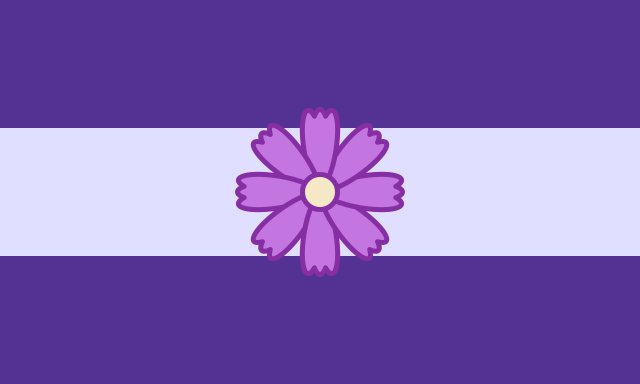
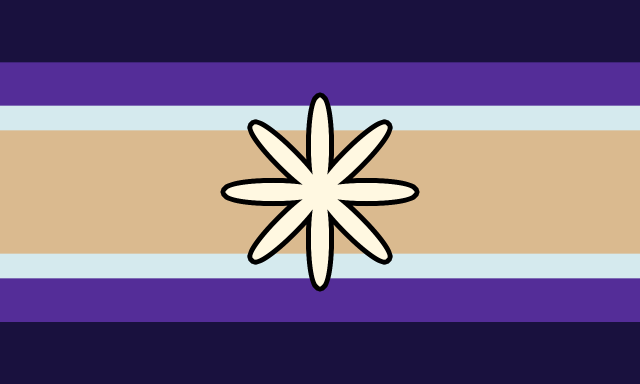
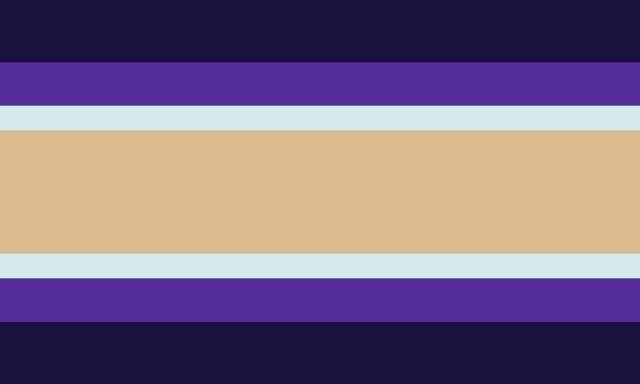
The terms caligic and sablic come from the terms caligenous and sable, respectively. The symbols chosen are both cosmos; one is a cosmos flower, which represents KLK love, and one is a symbol that represents the cosmos (a galaxy.)
As always, they can be used by anyone who is KLK. These flags were made to be similar to the simplistic look of both achillean and sapphic, however alternative KLK flags are always welcome. A term for the kenochoric equivalent of veldian/lesbian/etc. is next in the works.
Salvaen / Haunian: A term for gay attraction towards kenochoric people; a term for gay kenochoric people.
This is a kenochoric equivalent to lesbian, veldian, and cenelian. If you’re looking for general KLK, see sablic.
The terms come from haunt (haunian), and for the other two, I took inspiration from a surrealist painter named Salvador Dalí. It’s less based on the man himself, and more based off of his works, which are abstract and strange in a way that (for me anyways) feels very kenochoric. I added terms based off of both a historical figure, as well as something more general/broad, so that people can use whichever they prefer.
Achamoric or Kenomoric: A term kenochoric people may use for their orientation, not fitting into other categories of attraction or labels due to their kenosity. They might not feel perfectly “straight” or “gay,” because they feel that being kenochoric makes them not fit into any of those groups. It can be an orientation on its own, or it can be used as an umbrella term to describe a variety of kenous attraction.
Achamoric can also be used to describe a relationship in which one or more of the individuals involved is kenochoric. An achamoric relationship is neither “straight” nor “gay,” due to at least one of the parties being kenochoric.
Acha- may be used as a prefix for orientations to further specify, such as acha-lesbian, acha-veldian, acha-bi, and so on. “Achamoric” comes from the Greek word “achanís”, meaning vast. Kenomoric is a synonymous term for those who prefer it.
Achamoric was made with clear inspiration from diamoric. However, achamoric is not necessarily a subterm, as kenochoric individuals may or may not identify as nonbinary and/or consider themselves to also be diamoric.
TLDR: This term is mainly for people who 1. feel as though their feelings of attraction and/or labels do not fit into other categories because they’re kenochoric, 2. are in a specific kind of relationship that is not “straight” or “gay” due to at least one of the parties being kenochoric, or 3. have kenochoric specific attraction in general.
Transkenoine / Transkenous: An umbrella term for those whose identity is partially or fully kenoine/kenous. It can also be considered an umbrella term for those who transition towards kenosity, or a kenoine/kenous identity. It may refer to someone’s gender, presentation, or both.
A kenochoric equivalent to terms like transmasculine, transfeminine, and transneutral. Can be shortened to transkeno.
I FOUND THIS YAY. ok hiiii sorry i know i commented on this at one point and now i’m suddenly here again months later, but i’m working on making a new page for kenochoric and i was wondering if it would be ok if i added “vex” as an alternative term to hex directly in the explanation? I’d of course directly credit you if so!! Totally cool if you’d rather I don’t, just want to make sure and not add an idea of yours without approval :)
OH MY GOD HIII HIII omg this makes me very giddy actually I paced around my room for 20 minutes LOL but yes that’s absolutely wonderful!! that’d be super awesome actually!! this is just right in time because I have been meaning to make a more proper post explaining my proposal for vex as an alternative term to hex !!! I have had this floating in my head for months hahaha I’d be absolutely delighted if it’s included in the new kenochoric page!!
also I’d love to be tagged when you finish it hehe.. ever since I discovered kenosity a few years back it’s been one of the biggest parts of my identity, I adore this term so much!!
YAYYYY OK EPIC AWESOME i’ll make sure to tag you when i’m done!!! :3
I FOUND THIS YAY. ok hiiii sorry i know i commented on this at one point and now i’m suddenly here again months later, but i’m working on making a new page for kenochoric and i was wondering if it would be ok if i added “vex” as an alternative term to hex directly in the explanation? I’d of course directly credit you if so!! Totally cool if you’d rather I don’t, just want to make sure and not add an idea of yours without approval :)
can someone be both kenochoric and xenogender in a bigender way? like two separate genders and i'm both of them?
well since they’re separate terms in general, yeah of course! it’s kind of like how some people are a gender that’s a mix of man and woman [androgynous?], and some people who experience both of them but as standalone things [like me!] similarly, someone might experience that mixture of kenochoric and xenogender, or you might experience them both as distinct things :3
why’d i have to make the xenochoric flag such a banger i’m kinda pissed i’m not also xenogender now
ok whatever i caused so many xenogender people [especially archivists / organizers] so much confusion and headache with the creation of kenochoric and causing a bunch of non-xeno neogender umbrellas to get made, the least i can do is dedicate one of my prettiest flags to them as an apology
aw man, neocities just went down [i assume for maintenance] right as i was editing it. thankfully i copied what i was working on so i didn’t lose anything
also a really good reminder that i totally need to download a backup of my neocities after the sheer amount of work i’ve been putting into it. neocities isn’t going anywhere any time soon but like. if it did it wouldn’t even be a big deal if i simply had the zip full of my site. i could self host it or use nekoweb or whatever. another great thing about neocities #mypropaganda #makeaneocitiesrightnowplease
aw man, neocities just went down [i assume for maintenance] right as i was editing it. thankfully i copied what i was working on so i didn’t lose anything
ALT
ALT
ALT