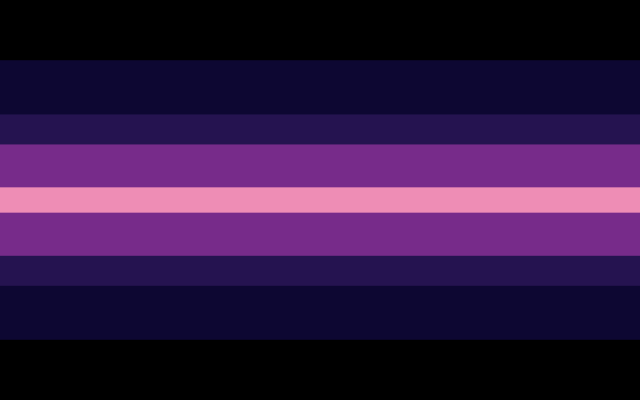
Ecters, originally coined with its alternative name Menre, was first created by me in 2022 here. Not all information about it on the original post is entirely accurate anymore, so an updated explanation is in order!
Ecter Identity, also called Menre, refers to identities and identity systems that are outside the boundaries of “gender” entirely. It’s comparable to something like nonbinary is for the gender binary, except it is outside of gender itself. It’s a huge umbrella term that can contain countless identification systems and unique experiences, each one capable of being just as varied and expansive as gender is. Someone might have their own, standalone gender identity, or they might experience identity in a specific ecter system.
Ecter and gender aren’t a binary. Ecter is anything outside of gender and is a massive catch-all, not one single standalone experience / identity system.
This can be a really difficult concept to understand. It opens the door to the idea that gender itself can have a vast realm of identity outside of it, while still filling a somewhat similar niche. Some ecters might feel similar in concept to gender identity, while others might be entirely different in a variety of ways, with no similarities to how gender is perceived or experienced.
Ecter comes from ect- which means outside, and -er, the same ending as gender. Broadly, this translates to “outside [of] gender.” Menre, meanwhile, is taken from genre, and should be pronounced similarly (mahn-rah, not mehn-rey.) Ecter is intentionally meant to sound somewhat similar to gender, while menre is meant to be more general. Ecter can be used the same way gender is, conjugation-wise; ie, ecter identity, ecters, ectered, and so on.
[2] Ecter Systems
Ecter Systems refers to ecters within their own self-contained bubble, often with their own “rules,” identification, and experiences. They can be considered their own standalone equivalents to gender identity. If you made something called “Lender,” which is its own system of identification outside of gender, with its own set of identities and experiences… then it would be an ecter system.
The best way of understanding this is to imagine a separate society from humankind. They’re a species with their own equivalent identities that are different from gender. There’s a series of experiences commonly associated with these identities, and the way it works might be entirely different from gender identity. These individuals would have ecters; crucially, the term given to their specific identity system (let’s say they call it “milliah,” or something) would be an ecter system. So to put it another way, “ecter systems” refers to self-contained bubbles that are their own equivalent to “gender,” whereas “ecter” itself is the catch-all term for everything outside of gender identity, regardless of if it’s in a defined system or not.
Another way of thinking about it is galaxies. “Gender” is our Milky Way, and everything outside of it is “Ecter.” Different galaxies, like Andromeda, are ecter systems, having its own orbit and different star / planet / etc. systems. Some ecters, like rogue planets, float around freely in space, not tied to any galaxy at all.
Ecter identities do not need to be in an ecter system in order to exist; plenty of them can be on their own, independently and not in any kind of system, sort of like how some people just use “nonbinary” or “queer” without any further specification.
Important to note that two ecter systems are usually just as separate from each other as ecters and genders, besides the fact that neither one is gender. No two ecters have to be alike, and ecter systems are not all universally connected to each other. Going back to the space analogy, being in one “galaxy” does not mean you’re connected to all the others. You can make ecter systems that are tied to each other, but unless explicitly stated, you should assume that they’re independent to themselves.
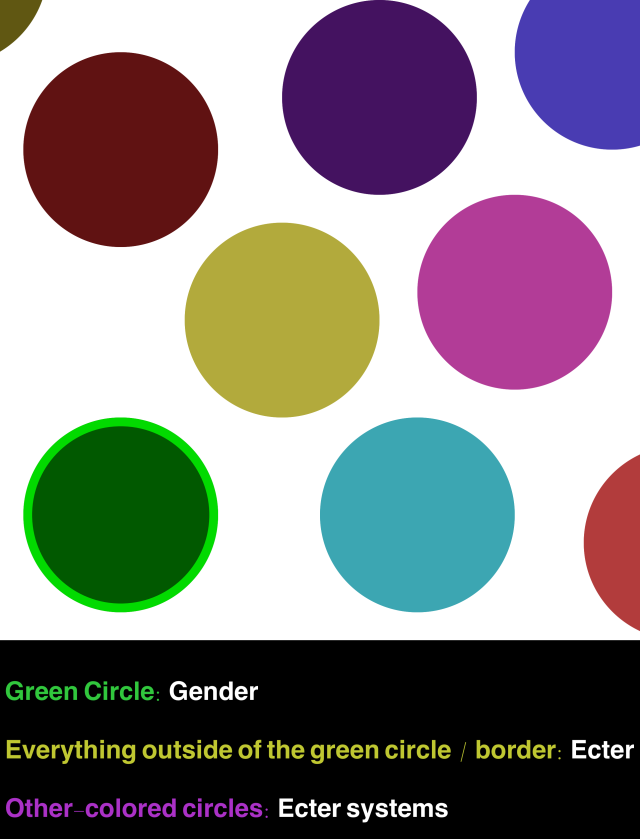
This is a really simple way of visualizing it. As you can see, everything outside of the green circle / border would be considered ecters, but ecter systems are their own self-contained bubbles that are different equivalents to gender.
[3] Notes
Some examples of ecters that already exist are kenocter, cybecter, and ecterfluid, all of which I made myself. Any ecters I’ve seen or made can be found in this tag.
Ecter was partly made to describe nonhuman characters and species that I thought would have their own unique equivalents to gender, while existing completely outside of it. I also think it could be considered useful to a variety of nonhuman and alterhuman individuals, who might not subscribe to the concept of “gender identity” and experience something outside of those bounds. That being said, ecter was made as a concept for absolutely anybody to use.
If this still confuses you, you can always ask me about it directly and I’ll try to word it differently as many times as you need. :)
i cannot express to you enough that you literally do not have to get into a relationship. ever. you don’t have to get married. you don’t have to be dating. you don’t have to search for “the one.” you don’t have to have sex. you don’t have to deal with any of that shit if you don’t want to. even if you’re not aro or ace or anything. you can have attraction to people in any kind of way, and still not want to do some or any of it. it’s about what you want to devote your time to and what you find fulfilling or important, not “well people said i had to because that’s what they consider normal behavior.”
Amatopunk is a term I coined in 2021, and has gone through a few different editorial additions since then, mostly to accommodate for more diverse groups of people, and discuss more facets of amatonormativity. There’s a lot more to add onto since then, so I’m creating a new post to refer to in 2025.
Amatopunk is a subculture and movement dedicated to rejecting amatonormativity in all forms. It disputes the notion that someone has to be in, or actively seeking, a relationship in order to be “normal,” that the way someone engages in relationships has to fit the amatonormative standard, and that any specific type of love or connection is what inherently makes us whole or fulfilled. It tells you to take a closer look at the way we define love, relationships, and other societal standards, and ask: “why? is this necessary?”
While the movement was first made in mind for those who are a-spec (asexual, aromantic, and other similar spectrums), it is not exclusive to them. In fact, it is not exclusive to any one type of person, community, or experience. It is centered around what you believe and how you view things, not any one specific label or experience. It is closely-tied to the queer community, but you do not need to be queer or lgbtq+ to be amatopunk.
Issues such as marriage rights for polyamorous and disabled people, destigmatizing a-spec identity and experiences, rights for those fighting to get a divorce or contraception, and rejecting notions, stereotypes, and pressure from those trying to force people to fit into amatonormative structures, are some of the different key priorities of amatopunk, though the discussion goes much deeper than these things alone. Amatopunk combines all factors of amatonormativity, and may touch upon other forms of oppression that can often intersect, such as ableism, misogyny, and racism.
Amatopunk is not, and never has been, a movement dedicated to normalize any kind of dangerous relationships, such as predatory, abusive, or incestuous ones. This is non-negotiable.
[2] The Flag & Symbols
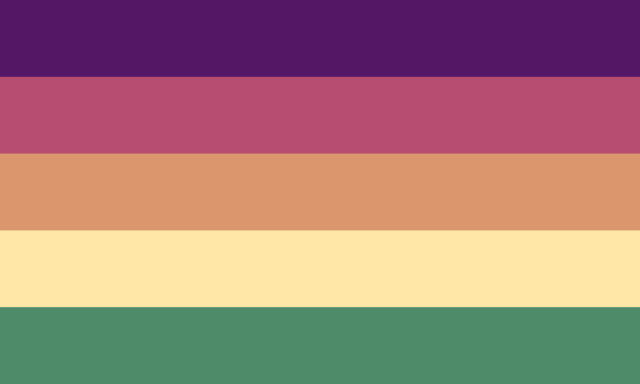
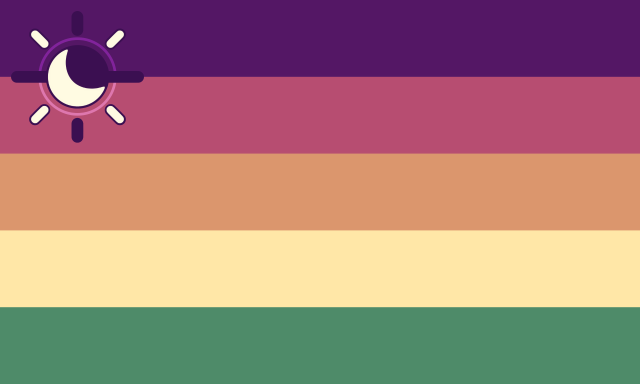
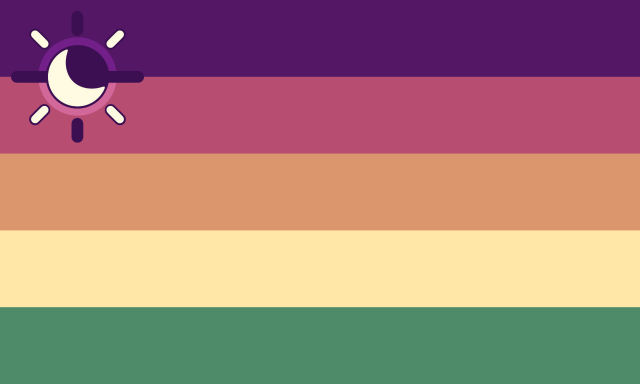
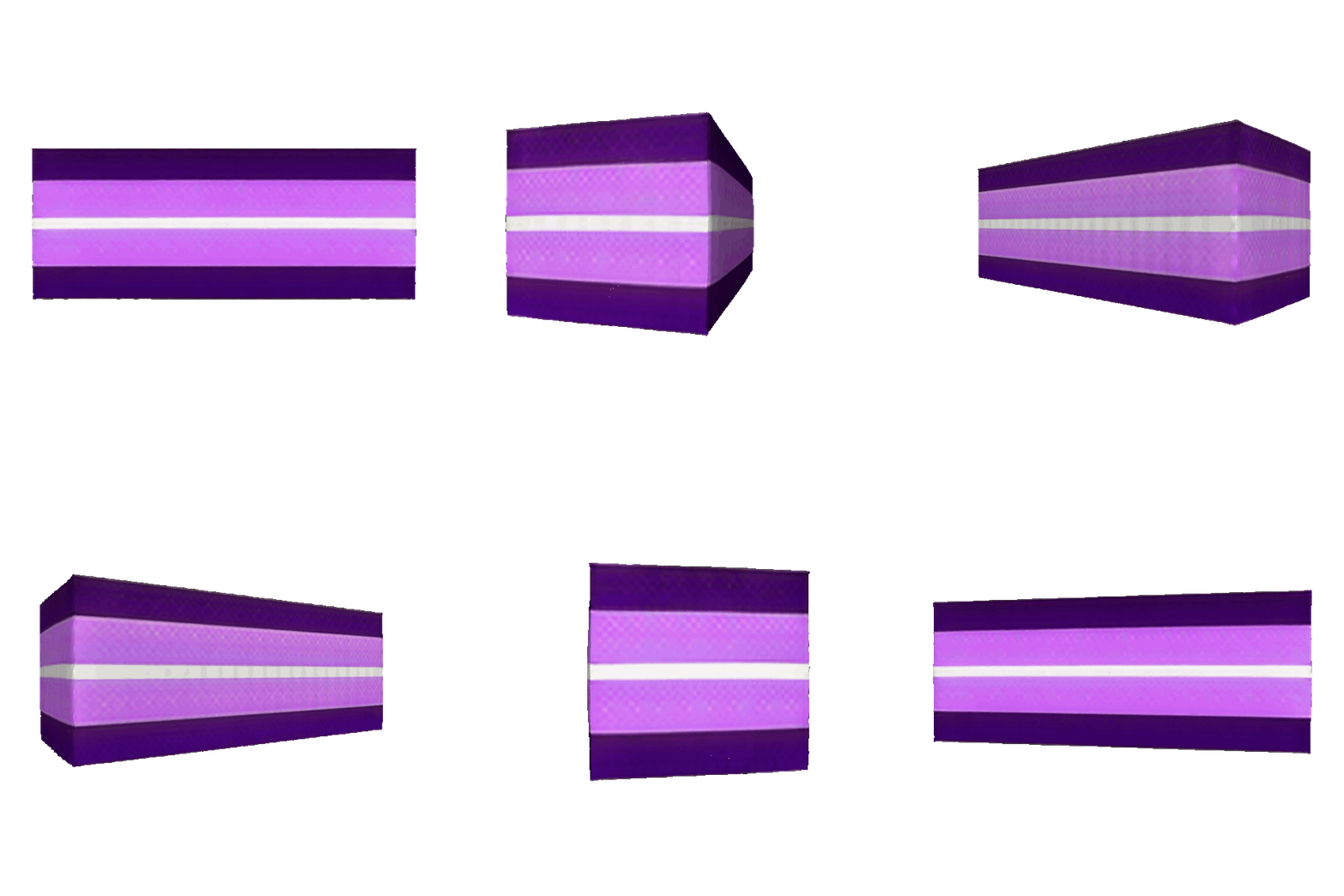
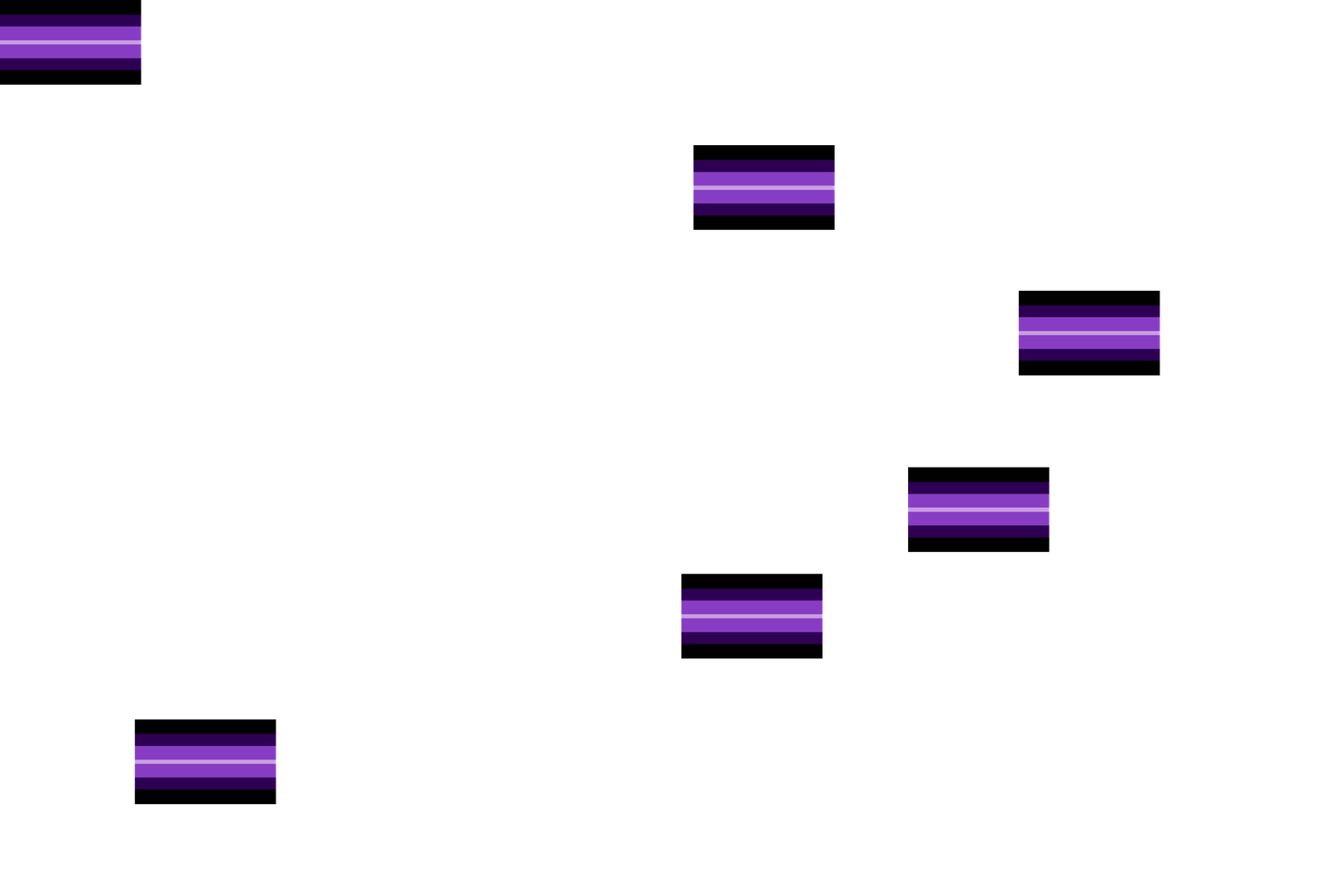
The amatopunk flag, posted at the top, was made with inspiration from a variety of different pride flags, but the individual stripes do not represent any one specific community. This is so that it can stay intentionally broad and inclusive as a political and subculture-based label.
As far as symbols go, when the term was created there wasn’t one considered specific to it. A variety of symbols have been used, such as the anarchist “A” with a circle around it, and icons of hands clasped together, but none are official, and none have been widely adopted.
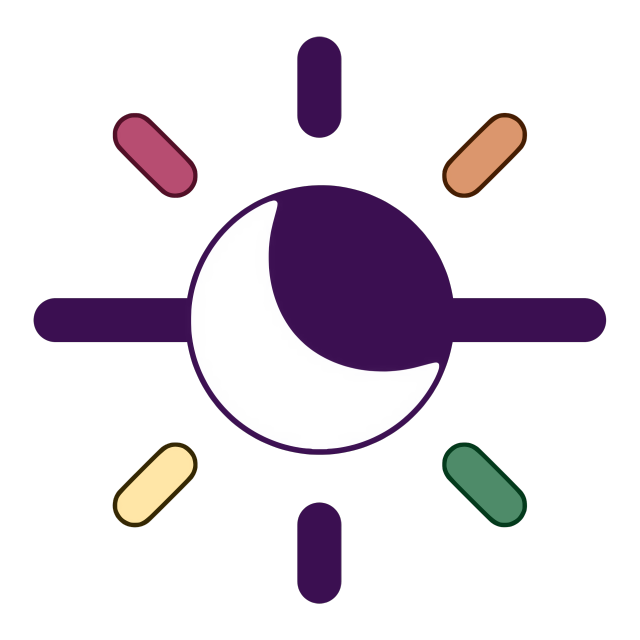
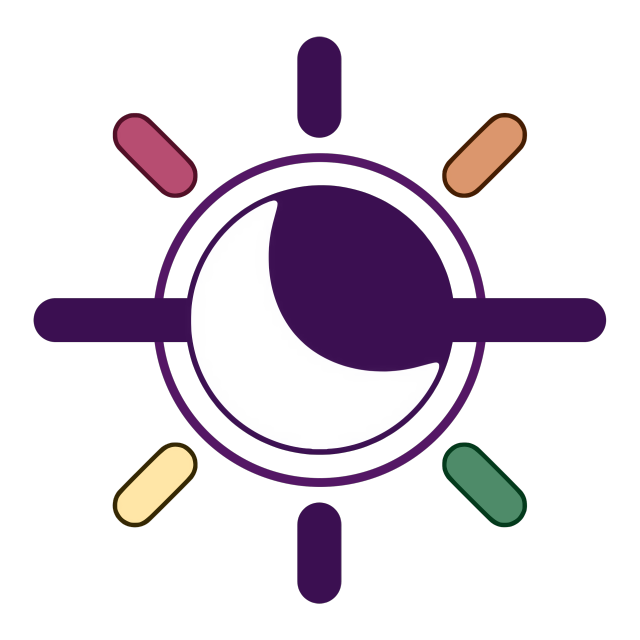
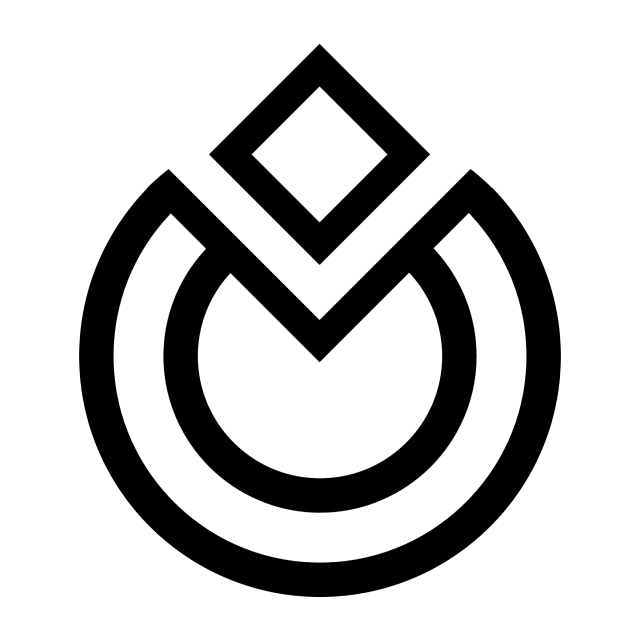
More recently, I decided to take a crack at what I thought could be a decent amatopunk symbol. I do not consider it “the” symbol, you can always make or use your own, but I thought it would be nice to contribute one.
These are the full-color versions, taken from the flag itself. There are a variety of alternative versions of these symbols, including a blank one and 2-color one, on the Neocities page.
The symbol was made in mind of many different groups of people. The eclipse represents a general “bond” between things, and how it is not innately romantic or otherwise. This can represent amatopunk and its focus on relationship structures, and could also represent those who are in or desire relationships while still ideologically aligning with amatopunk. The ring around the second image may represent people who orbit “around” this, such as those who participate in different, less socially accepted relationships, either due to discrimination, a different structure such as QPRs and waverships, or anything else. The beams in different colors represent the groups who may be entirely disconnected from this framework, either politically, simply by choice, or due to their identity. It may also represent those in a relationship with more than two people, hence why there is a plurality of them. The two connected lines in the horizontal center can vaguely resemble the “A” symbol mentioned before, with it going across the moon, representing the term’s political and ideological nature.
I don’t think any symbol can perfectly include every single group that can fit under a term this all-encompassing, but I did my best to include as much variety as possible. As stated before, you do not have to use it, and you can always make your own.
Here is the amatopunk flag with these symbols added onto it:
[3] Further terminology
Amari, or Amarity, refers to an unspecified or “generalized” form of attraction. This can refer to someone who chooses not to distinguish different types of attraction, does not prioritize any one kind of it, or it may refer to those who simply feel a sense of unspecified attraction in some kind of way.
Relationship Anarchy is core component of amatopunk for many; it refers to the belief that relationships should not be bound by set rules, aside from the rules the individuals involved mutually agree upon. It is based on the rejection of the traditional power structure that is the norm in our society.
Affinity is a term that has been used in place of attraction or love among some individuals, as a way to describe having an… affinity for other people, but in a less conventional way.
Amatosonas were created with direct inspiration from voidsonas, which relates to voidpunk. It refers to a depiction of yourself in “an amatopunk way,” or as an amatopunk-based persona. This has often been done with plant, floral, or fungal themes, due to how their relationships and general structures work in a unique way, and just because it’s cool. But, your amatosona does not need to fit any rules; it can be whatever you want. You also, of course, don’t need to have one of these
Kenochoric is a term I created back in 2020. It’s gone through numerous edits, additions, and different sites to talk about what it can mean, subterms for it, and new terminology. With this version of the post, I hope to put in everything relevant up to this point, and have a live post available on Tumblr since my old blogs are gone.
Kenochoric’s official “homepage” is now on my Neocities. The old Carrd is still up, but it has a disclaimer that will redirect you to the right place. I only keep it up for archiving’s sake. The new page is still technically a WIP, and will contain more and more over time, but it’s fully functional and has the definition below.
[1] The Definition of Kenochoric:
Kenochoric is a gender identity centered around concepts like the unknown, darkness / obscurity, liminal spaces, emptiness, the uncanny valley, nostalgia, and anything else that can be considered similar, or evokes similar “vibes.” It’s also an umbrella term for identities that can fall under this definition. There isn’t any one specific “thing” that makes something kenochoric or not, because gender identity and what it means to you is personal.
While kenochoric was created to be a gender umbrella, it is also sometimes used to describe other kinds of identities.
The term kenochoric stems from two things; keno was taken from kenopsia, and the prefix, kenós, is a Greek root meaning “empty.” Choric was taken from another Greek root, khôros, meaning “room,” and was also partly chosen because it somewhat resembles words like choir and chorus.
Kenochoric isn’t a part of other umbrella terms, such as xenogender. It is a stand-alone identity. That being said, you can of course be kenochoric as well as other genders, such as a kenochoric man / woman, kenochoric and xenogender (xenochoric), or anything along those lines. Hell, even people without gender identity (namely gendervoid and similar terms) could consider themselves kenochoric.
Someone who is kenochoric can be called an omen, or alternatively a hex. Omen is meant to be more in-line with words like man / woman, while hex is a little closer to boy / girl, but you don’t need to be any certain age to use either, similar to how some adults still refer to themselves as girls / boys simply because they prefer it. An alternative to hex, vex, was also created by Tumblr user @sangrenfreude!
Kenous refers to kenochoric “qualities,” equivalent to masculine and feminine. Kenosity is the equivalent to masculinity and femininity. Kenous is also sometimes referred to as kenoine.
[2] The Flags and Symbols
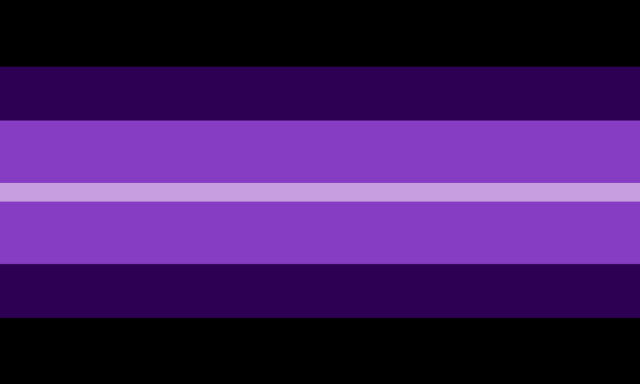
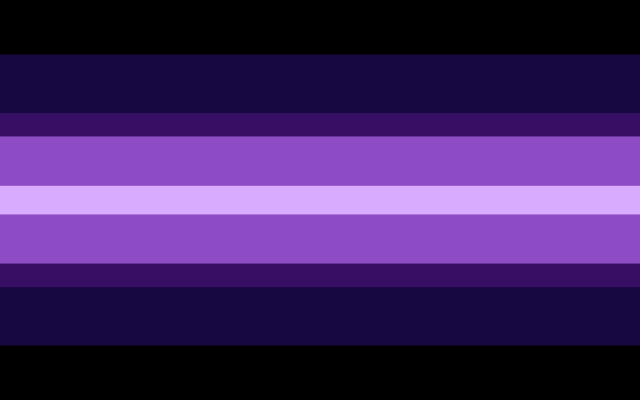
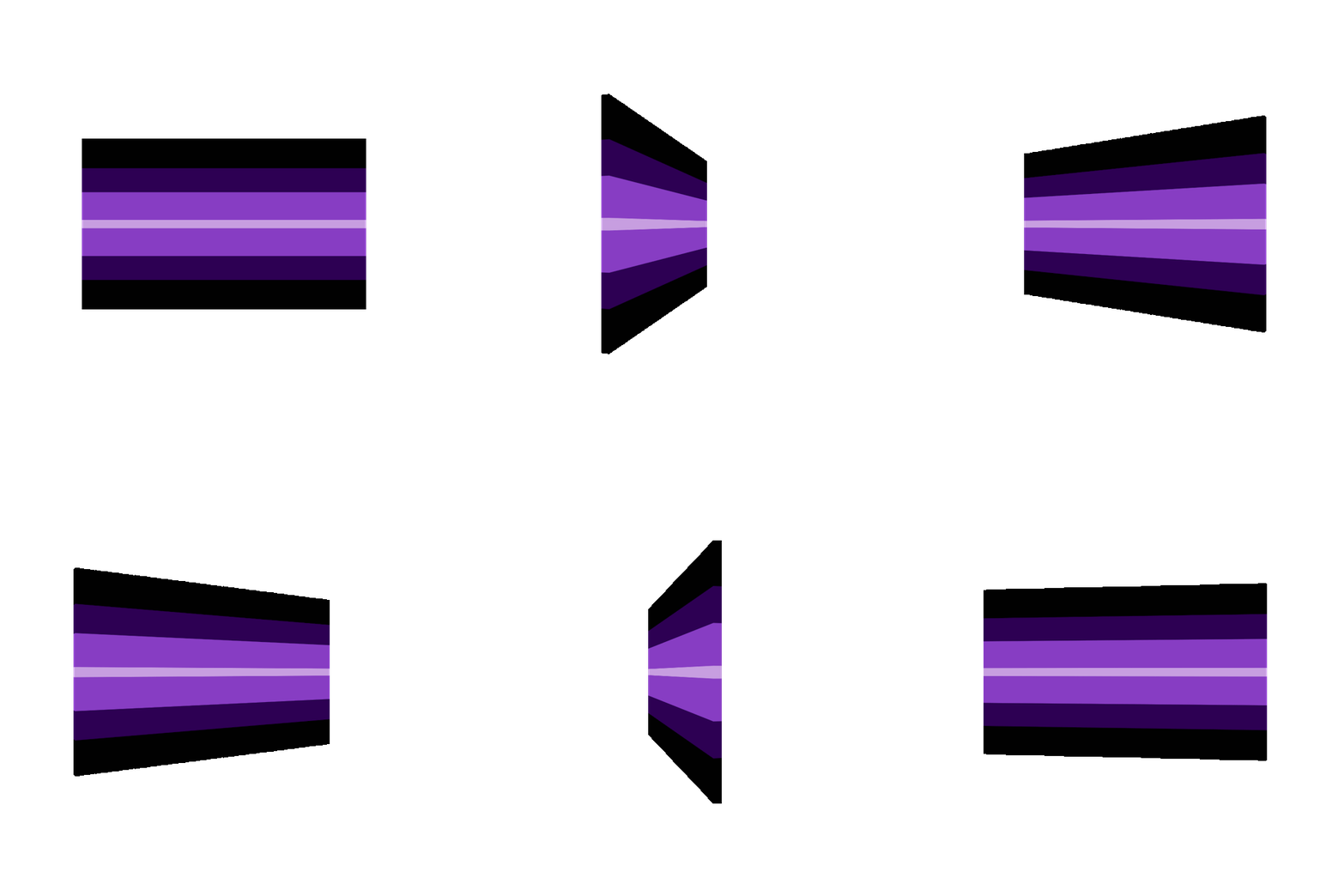
The flag on the top is the official, original kenochoric flag. Below are two alternatives I made a couple years ago.
ALTALT
These aren’t “new” or “preferred” flags or anything, I just wanted to toy around with the flag a bit and really enjoyed these. So, they can be used as much as the original flag is.
ALTALT
This is the kenochoric symbol, which was originally made by @mourningmogaicrew. There is a white and black variant here, so you might only see one of them on screen.
[3] Some Extra Terminology
Kenochord is often used to describe a kenochoric gender.
Achamoric, or kenomoric, is a term kenochoric people may use for their orientation, not fitting into other categories of attraction or labels due to their kenosity. It can be an orientation on its own, or it can be used as an umbrella term to describe a variety of kenous attraction (such as the terms below.)
Haunian or Salvaenis a term for being attracted to kenochoric people in a “gay” way. Comparable to lesbian and veldian.
Kenochoric-loving-kenochoric (klk), also called sablic or caligic, is for kenochoric people attracted to other kenochoric people, exclusively or not. Comparable to sapphic (wlw) and vincian (mlm).
This clip of Judith Butler is so good I just had to share it on my account. The way they intertwine feminism and trans liberation together isreally refreshing, I have GOT to read more of their books. The original clip is from an interview they had with @/politicsjoe!
[Judith uses both they/them and she/her pronouns, but has said they prefer the former.]
Transcript:
[The way] feminism began was by calling into question, received notions of what a woman is. They tell you, “you belong in the household.” They tell you, “you’re good for reproduction.” They tell you, “You’re not able to do that kind of work. You can’t engage in sports. You can’t be a public speaker. You certainly can’t be a politician. You can’t be an intellectual, or if you are, you’re never going to be quite as good.”
So what has feminism been about? It’s been about contesting received ideas of what a woman is. Why did we start women’s studies, feminist studies, gender studies? Well, we did because we wanted to call into question these presuppositions that had been taken for granted for too long.
So we ask the question, what is it to be a woman? Or what does it mean to be a woman? Simone De Beauvoir, “one is not born but rather becomes a woman.” Really? It’s not biologically… it’s not the biological function that makes you a woman? No, it’s not the biological function. It’s actually nothing specific about the biology that alone defines you as a woman. It’s part of the picture, but how you live that, way you deal with that, is a question of history. It’s a question of freedom. It’s how you negotiate your situation, which is a historically complicated one, where there are established norms and roles.
So feminism has always kept the question open, “what is a woman,” And refused to answer it. Refused to answer it on principle. Because we don’t know all the things women can be and do, and we’re not about to say in advance, “This is who you are. Stay within your limits. Stay within this category. We’ve decided this is what a woman is, and you have to live there.” No, we don’t do that. We’re a freedom struggle.
It sucks so much that it took years for me to figure my gender out, so many years never feeling fully satisfied calling myself anything, because of joint transphobia from cis people and misogyny + exorsexism from other trans people. Like, on one hand I had cis people try to force me to be feminine, pushed me into being A Woman in a way that made me so uncomfortable and dysphoric that I became extremely avoidant and negatively biased towards it, thought I had to be a man and only a man or otherwise I would have to be that same thing getting forced onto me. Then while I was growing up there were transmeds everywhere, I briefly was one after some adults pulled my 14 year old self into a Discord server from Tumblr because I was openly IDing as a demiboy. And obviously they, all together, were able to dismantle a younger teenagers half-baked arguments and understanding of Big Scary Words and they sounded smart, so I thought they must be right. Then being surrounded by misogyny, the constant discourse about queer women of this or that group, the right-wing and antifeminist memes of my teen years being everywhere, Gamergate, transmeds… it only made me feel both unhappy in my manhood because it was so focused on self-hate, but it also unknowingly made me internalize so much misogyny and basically made the idea of also being a woman sound like a horrible, awful thing. Not great when you’re both
But there’s a silver lining to it, from when I got pulled out of the transmed spiral into hell, that I still remember to this day. There was this trans guy on my bus who was just… the most radiant and incredibly positive person I’d ever met. He was always there for me when I was going through all that depression and moping around, no matter how ridiculous I thought I was being, he showed me happy music and patted my back and was just. Always a friend! And he barely even knew me! One day I find out two things. First of all, he didn’t have gender dysphoria. And it confused the hell out of me, because The Worms had taken over my brain and I thought, wait, what, aren’t those people [insert horrible stereotype here]? That shook me hard enough. But THEN, not long after I found out the guy- this positive, unconditionally kind guy who was seemingly friends with everyone- was getting bullied. By almost all the other trans people in my school, including ones I thought were nice. Purely for not having gender dysphoria. And I realized how fucked up my new “friends” twice my age really were and said fuck that, bye assholes! Shout out to Marco the best trans guy of all time.
About a year later, largely thanks to Marco, I was very open about being trans. I didn’t know I was nonbinary yet, but I was much more comfortable in my manhood and went by just a male name and pronouns despite not “passing” at all. And I met this person who at the time was IDing as a cis pan guy. We became REALLY good friends, I sometimes got asked kinda weird questions but I was open to it, I knew my friend’s parents were conservative and not everybody’s gonna know everything, though I did put my foot down [gently] a couple times when I needed to. I just existed, openly, around people. And just last year, I got an email from her. It turned out, she was a trans woman and she had no idea that was even an option for her. And what helped her figure it out? According to her, it was meeting me. Realizing it was an option, because I didn’t hide who I was in front of a supposedly cis person who was confused, but never mean, always tried. Hearing that was fucking life-changing
I think my point to all of this is like. Actually, being open about who you are is a good thing. I don’t think you should ever feel ashamed for being open about yourself and living confidently with it. You might not realize it, but you literally change people’s lives and make them realize that they don’t have to be miserable purely by existing openly. That being trans can bring you joy and happiness. Marco, purely by being nice to me and being open about his identity, pulled me out of a self-hating spiral that was built on harassing trans kids. I, purely by existing, helped a trans girl who didn’t even know what the hell a transgender person was, who didn’t always use the right language and who I openly talked to about being trans anyways, correcting but never shaming her for it, realize that she could be trans, too. Your open existence literally brightens people’s lives
i always like asking random people i know what their gender would be if it had to be one specific song. i always get interesting answers. it’s pepper steak from OFF for me
also while i’m on the train. hi. if you have a rentry or a carrd or whatever, consider neocities. it’s so awesome. html is hard and time-consuming for you in comparison to the ease of a rentry? no problem + understandable, i know how it can be + i’ve got you covered
check out sadgrls layout builder and all her other resources for the layout of the page [it looks good on mobile too, and everything within the code is labelled, so you know exactly where each element is], and html-online to convert rich text to html text, or alternatively markdowntohtml to convert markdown [what rentry uses] to html. just copy-paste the converted text into the relevant place in the layout code, and boom. you’re pretty much done aside from however much customization you want to do or not do. you can literally just stop there if you so choose
i promise you it doesn’t need to look perfect like all the sites on the homepage. it doesn’t matter, you can edit that shit little by little whenever you want. you can learn html in tiny little pieces so it becomes a little easier to edit your site over time, if you want. but crucially, you own that site. you can freely download and use that site and everything on it however you want. wanna self host it later? go ahead! it’s YOURS. it helps promote a more independent internet AND you get to have fun. make a neocites now
 ALT
ALT ALT
ALT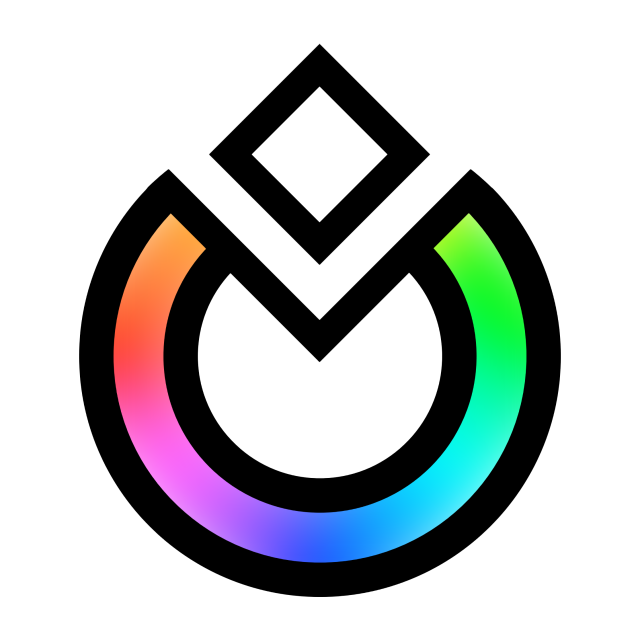 ALT
ALT