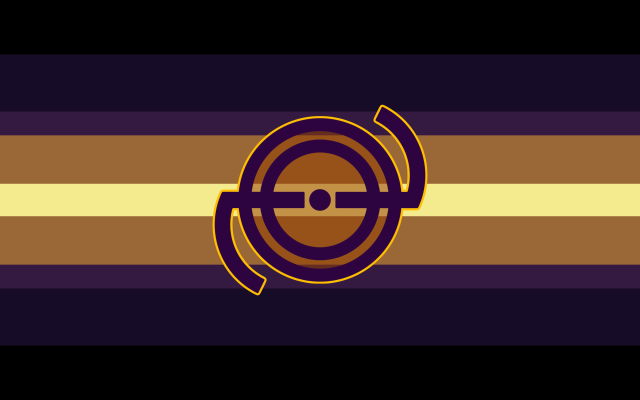
my new gender term. it’s called mirarel, or mirarigender. you can also just call it gender mirroring or mirrored gender, and it’s meant to be a parallel to mirrored pronouns. this term is for when you are the same gender as whoever is talking to or about you. it’s similar to things like mirrorgender, but in this instance, you don’t change based on the people around you in a given moment, or based on any specific type of relationship. you simply are the same gender as whichever person is talking to or about you in any given moment, regardless of where you are, or if they even know you. it’s pretty much the same as mirrored pronouns, but with gender instead.
like with mirrored pronouns, the experience could be more fuzzy or more clear. with fuzzy mirroring, you match the general, broad characteristics of whoever is talking to / about you; if someone who is genderspace is referring to you, you might just be generally “nonbinary” or “some space-related gender,” for instance. with clear mirroring, the match is exact. if someone who is genderspace is referring to you, you are also genderspace. i think there could also be odd mirroring, where you always match the gender as the person talking to / about you, but your presentation or other characteristics are always different, and other things like that.
the name comes from the latin word mirari (“to wonder at; admire.”)
like with other matching genders, pangender, etc., this won’t apply to mirroring genders that you literally can’t experience, like culture-specific genders, neurogenders that don’t apply to you, and that kind of thing. in those instances, a user might be obscurian, neutral, or entirely agender.
Agnogender: An identity where the user feels connected to a gender, and might roughly identify as such, but isn’t sure what that gender is supposed to feel like in the first place, causing a disconnect.
This is a re-upload, and completely new flag, for a term I made years ago. The original version can be found here.
As an example, the user might have a difficult time understanding the specific identity in question, or identity in general. This could be for a variety of reasons, like identity disturbance, dissociation, being obscurian, nonhumanity, or just having a complex connection with a certain identity, or identity in general. Whatever the “disconnect” in this definition means is personal to the user.
Agno- can be used as a prefix to attach onto other terms, like agnoman, agnowoman, and so on. The root comes from the word agnosthesia, which means “the state of not knowing how you really feel about something.”
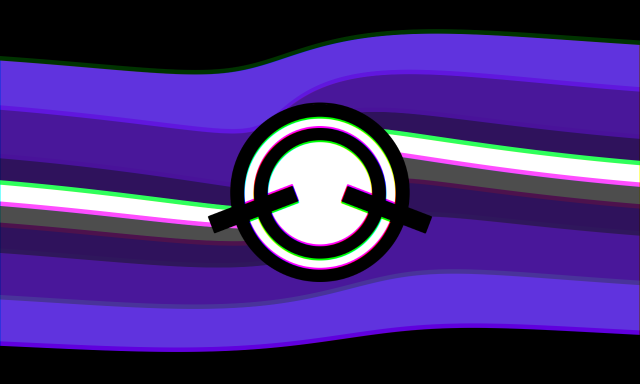
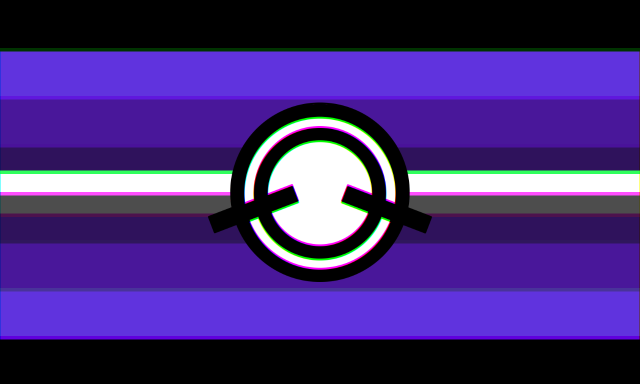
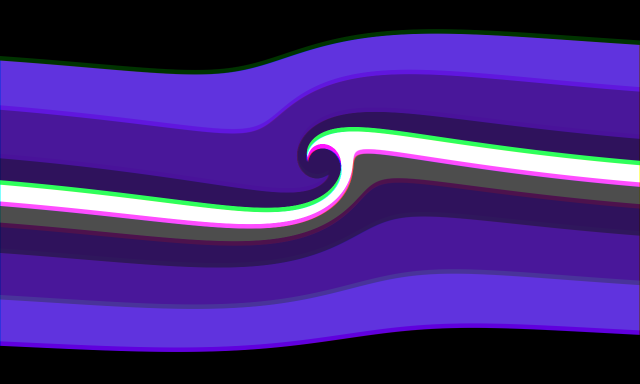
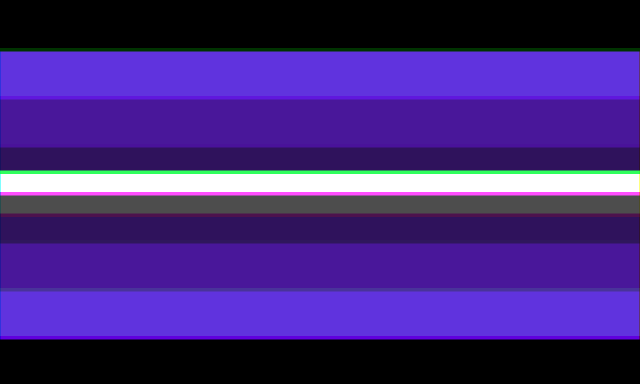
The symbol used on the flags is the kenochoric symbol. The effect used to create the small colored lines is called chromatic aberration. The plain, unedited versions of these flags can be found below, or linked here as a backup.
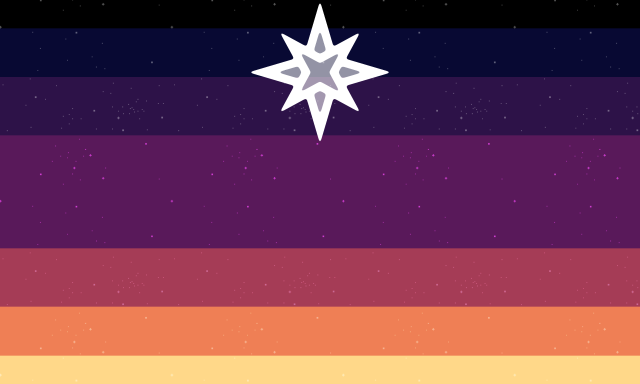
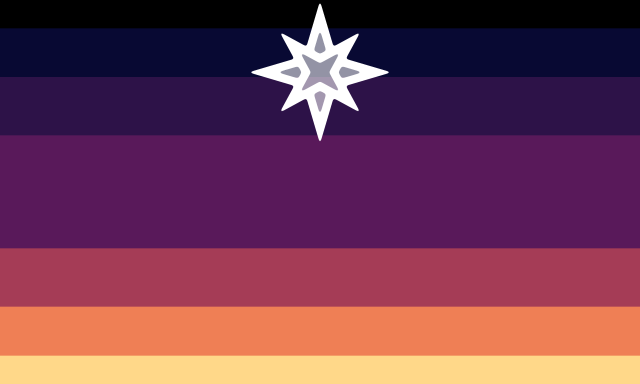
Polarisal: A gender that is, or is tied to, the North Star (Polaris.)
Can also be called polarisgender or northstargender for the sake of simplicity. If you want, you can use polarisal for something other than a gender identity, like an ecter or alterhuman experience.
This is a term for when someone is both kenochoric and maverique in some way. I couldn’t decide which version of the name I liked the most, so I just used all three.
This is meant to be a broad label for anyone who is in both groups, whether it be simultaneously, being fluid between them, one being a part of the other’s experience, or something along those lines.
Not to be confused with kenochorique, which is a term for someone who is kenochoric in an abinary sense, but not specifically maverique.
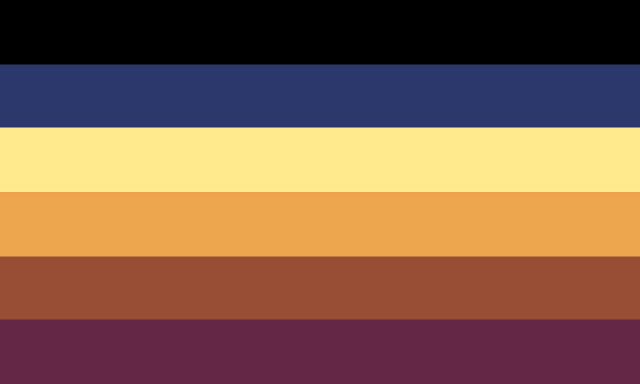
The symbol on most of them is a combination of the maverique symbol and the kenochoric symbol, which is right here:
 ALT
ALT